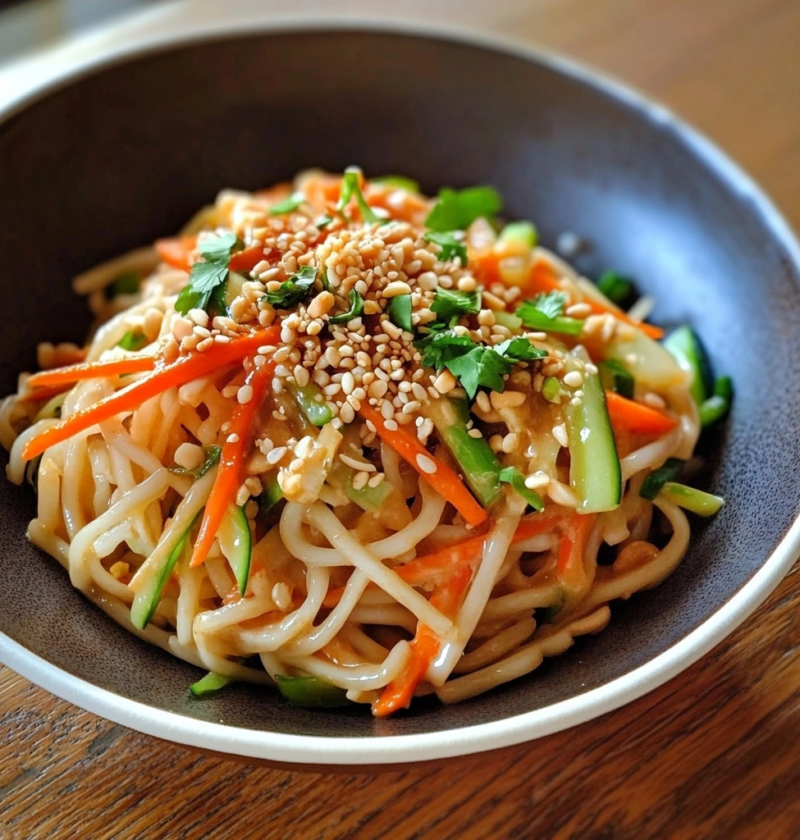
Cold Sesame Noodles offer a refreshing, nutty, and savory bite perfect for hot weather dining. This dish combines chewy noodles with a creamy peanut sauce and crisp vegetables to create a satisfying meal that requires minimal cooking effort. The flavors meld beautifully while the dish remains cool and appetite stimulating throughout the summer season.
<!– image-1 –>
| Detail | Information |
|---|---|
| Prep Time | 15 minutes |
| Cook Time | 10 minutes |
| Total Time | 25 minutes |
| Servings | 4 |
| Difficulty | Easy |
| Cuisine | Asian Inspired |
| Category | Main Dish |
| Method | No Cook / Boil |
Why This Recipe Works
This recipe works because it balances rich, nutty flavors with crisp, fresh textures that stay intact even after the noodles cool down. The sauce emulsifies perfectly in the noodle cooking water, creating a silky texture that clings to every strand without becoming greasy or heavy.
I find that using reserved starchy water from the pasta is the secret to binding the peanut butter and vinegar into a cohesive sauce. This technique ensures that the sesame paste dissolves completely rather than clumping together in small globs. It simplifies the process significantly for home cooks who do not want to deal with a blender or food processor.
The vegetables add a necessary crunch and nutritional boost without requiring much preparation time. By blanching the bean sprouts quickly, they retain their fresh snap while removing any potential raw earthiness. This step also helps to cool them down rapidly, fitting the cold noodle theme perfectly.
Finally, the combination of sesame oil and toasted seeds provides an aromatic depth that makes the dish feel substantial. You get all the satisfaction of a hot meal without the heat of the kitchen or the steam of a stove. The result is a meal that feels gourmet yet is genuinely easy enough for a weekday lunch.
Chef Tips for Perfect Results
Mastering the sauce consistency and noodle texture is essential for achieving the best possible flavor profile in this dish.
- Reserve cooking water wisely: Before draining the pasta, scoop out at least half a cup of the hot cloudy water. This starchy liquid is crucial for thinning the thick sauce into a pourable consistency.
- Blanch vegetable sprouts: Do not skip the brief boil for bean sprouts as this removes any unpleasant smells while keeping them crunchy.
- Rinse noodles immediately: After draining, rinse them under cold running water to stop the cooking process and remove excess starch that makes noodles sticky.
- Toss while warm: Add the sauce while the noodles are still slightly warm so they absorb the flavor more effectively than when they are completely cold.
- Adjust salt carefully: Start with less salt in the sauce since soy sauce already contains significant sodium levels that will integrate later.
- Crush peanuts fresh: Freshly crushed peanuts provide a better aroma and texture compared to pre-crushed versions that may have lost their oils.
- Toast sesame seeds: Lightly toasting the seeds in a dry pan enhances their nutty flavor and adds a subtle golden color to garnish.
- Chill sauce components: Letting the sauce sit for ten minutes in the fridge helps the flavors meld together before mixing it with the noodles.
Common Mistakes to Avoid
Avoid these common pitfalls to ensure your noodles have the correct texture and flavor balance every single time you prepare them.
| Mistake | Why It Happens | How to Fix It |
|---|---|---|
| Noodles stick together | Residual starch is not rinsed off | Rinse under cold water immediately after boiling |
| Sauce is too thick | Not enough pasta water added | Gradually add reserved cooking liquid until smooth |
| Veggie wilts too much | Overcooked bean sprouts | Blanch sprouts for exactly ten to fifteen seconds |
| Texture is soggy | Vegetables sit too long on hot noodles | Keep veggies separate until serving time |
| Flavor is bland | Undersalted sauce mixture | Add salt incrementally while tasting constantly |
| No sesame aroma | Un-toasted oil or seeds | Use toasted sesame oil and toast raw seeds briefly |
Variations and Substitutions
You can easily customize this dish to accommodate different dietary needs or flavor preferences without compromising the core taste profile.
| Ingredient or Element | Substitution or Variation | Impact on Flavor or Texture |
|---|---|---|
| Peanut Butter | Sunflower seed butter for nut allergy | Similar creaminess with a slightly lighter taste |
| Noodles | Rice vermicelli sticks | Softer texture that absorbs sauce quickly |
| Soy Sauce | Coconut aminos for gluten free | Sweeter flavor and same savory depth |
| Vegetables | Shredded cabbage and red pepper | More robust crunch and vibrant color contrast |
| Sweetener | Agave syrup instead of sugar | Neutral flavor that thins the sauce better |
| Oil | Extra virgin olive oil | Changes flavor profile to be more fruity |
| Spice | Red pepper flakes | Adds heat without changing the savory base |
| Protein | Tofu or grilled chicken strips | Increases satiety and makes it a fuller meal |
| Acid | Lime juice instead of vinegar | Provides a brighter citrus note to the sauce |
Serving Suggestions and Pairings
This versatile salad can stand alone as a light lunch or complement a larger feast as a refreshing side dish option.
- Serve with grilled chicken thighs seasoned with ginger and garlic.
- Pair alongside steamed rice to make a complete bowl meal.
- Add extra chili oil for those who prefer a spicy kick.
- Top with sliced hard-boiled eggs for added protein richness.
- Serve with cold egg drop soup to balance the heavy nuttiness.
- Accompany with a cucumber salad to enhance the fresh cooling effect.
- Pair with warm potstickers for a classic Asian fusion dinner.
- Create a noodle bento box to pack for a quick work lunch.
- Serve with miso soup or clear broth to round out the meal.
- Add sesame crackers on the side for a crunchy snack element.
- Pair with a fresh mint tea to cleanse the palate between bites.
- Top with lime wedges so diners can add acidity as needed.
Make Ahead Options
Yes, you can prepare parts of this recipe ahead of time to save significant effort during busy weeknight dinners. The noodles can be boiled and stored in an airtight container for up to two days in the refrigerator without losing texture.
The sauce also keeps well in the fridge for about three days, allowing you to whip up the meal in minutes. To ensure the noodles do not absorb all the liquid before you are ready to eat, store them mixed with a very small amount of oil to prevent sticking. Separate the vegetables too to keep them crisp, adding them fresh just before you toss everything together.
When ready to serve, just add a splash of warm water to thicken the sauce if it has thickened too much. This approach works well for meal prepping lunches without the need for reheating, maintaining the cold and refreshing profile.
Storage and Reheating
Proper storage is vital to maintain food safety and ensure the noodles remain fresh for multiple days of meal consumption.
| Method | Duration | Instructions |
|---|---|---|
| Room Temperature | 2 hours | Keep covered to prevent drying out and bacterial growth |
| Refrigerator | 3 days | Store airtight in an opaque container away from strong smells |
| Freezer | 1 month | Freeze sauce and noodles separately for best texture recovery |
| Reheating | N/A | Do not microwave as noodles become mushy |
| Make Ahead | 24 hours | Add dressing to noodles right before serving to prevent sogginess |
Nutritional Information
Approximate values are based on one serving and may vary depending on exact ingredients and portion size.
| Nutrient | Amount per Serving |
|---|---|
| Calories | 450 |
| Protein | 14 grams |
| Fat | 20 grams |
| Saturated Fat | 4 grams |
| Carbohydrates | 55 grams |
| Fiber | 4 grams |
| Sugar | 5 grams |
| Sodium | 650 milligrams |
Frequently Asked Questions
Can I use any type of noodles for this?
Yes, you can use wheat noodles, egg noodles, or dried spaghetti for this variation. The texture will vary slightly depending on the flour type used for the pasta base.
How do you prevent the noodles from clumping when cold?
Cool them quickly under running water and toss with a small amount of oil. This creates a barrier that prevents the starches from bonding together too tightly.
What if the sauce gets too thick after sitting?
Add more reserved noodle water or a little warm tap water and whisk vigorously. The starch acts as a binder to re-hydrate the peanut butter mixture effectively.
Can I freeze Cold Sesame Noodles?
You can freeze the sauce well but freezing cooked noodles may result in a mushy texture. It is best to freeze the sauce and cook noodles fresh.
How do I make this dish more spicy?
Add chili garlic sauce or crushed red pepper flakes directly into the sauce mixture. Taste and adjust gradually to avoid overpowering the sesame flavor.
Can I substitute peanut butter with almond butter?
Yes, almond butter works well though it has a slightly milder and sweeter taste profile than peanuts. Adjust salt levels to compensate for the lower sodium content.
Conclusion
This Cold Sesame Noodles recipe provides a refreshing, flavorful, and easy solution for any meal when the weather turns hot. You will love the creamy nuttiness combined with the fresh crunch of vegetables in every bite. Make it tonight for a meal that satisfies without heating up the kitchen.
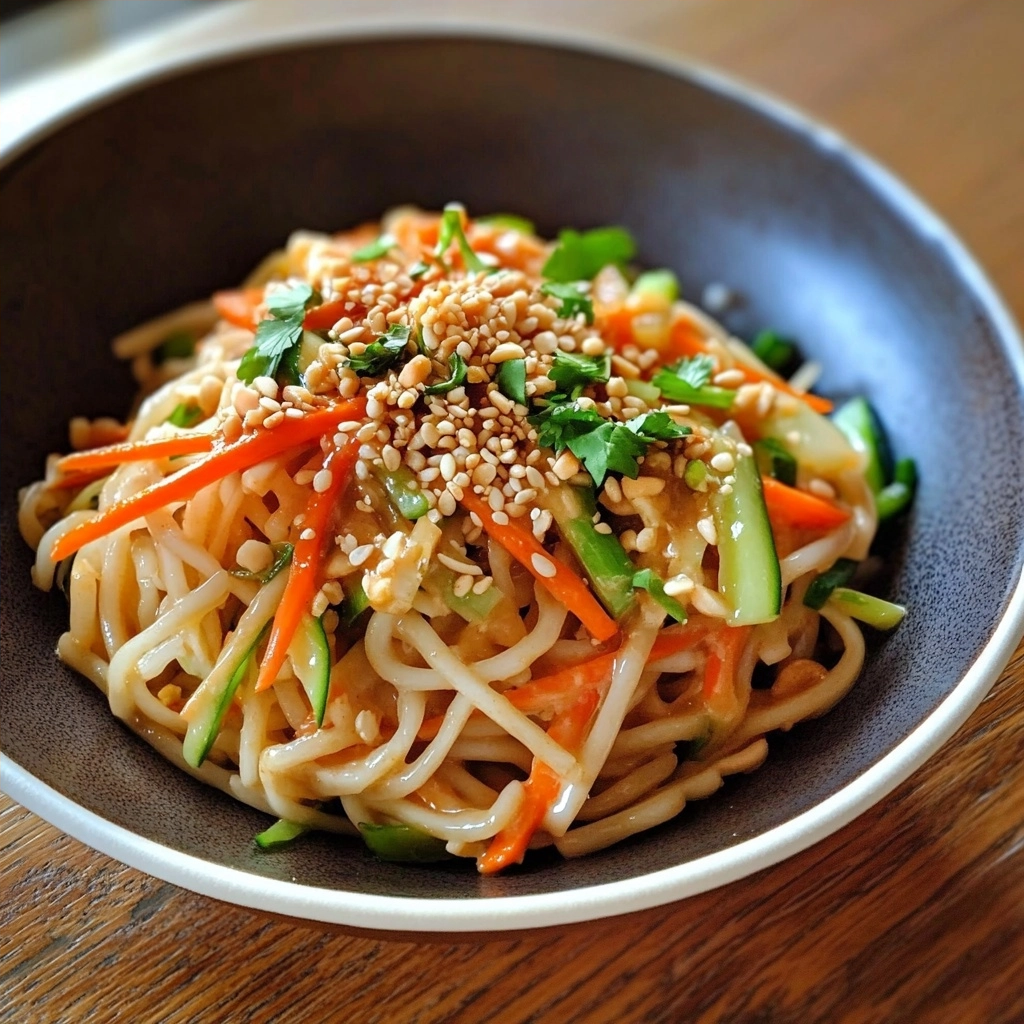
Cold Sesame Noodles Recipe for Quick Summer Dinners
Ingredients
Method
- Bring a pot of water to boil
- Cook noodles 4-5 minutes until al dente
- Reserve 1/2 cup starchy cooking water, then drain noodles
- In a large bowl, mix peanut butter, soy sauce, vinegar, maple syrup, sesame oil, and reserved water until smooth
- Add carrots, cucumber, and blanched bean sprouts to the sauce, tossing gently
- Divide into 4 bowls and garnish with green onions and sesame seeds
Nutrition
Notes
Adjust sauce consistency by adding more liquid if needed
Optional: Add chili flakes or chopped cilantro for extra flavor