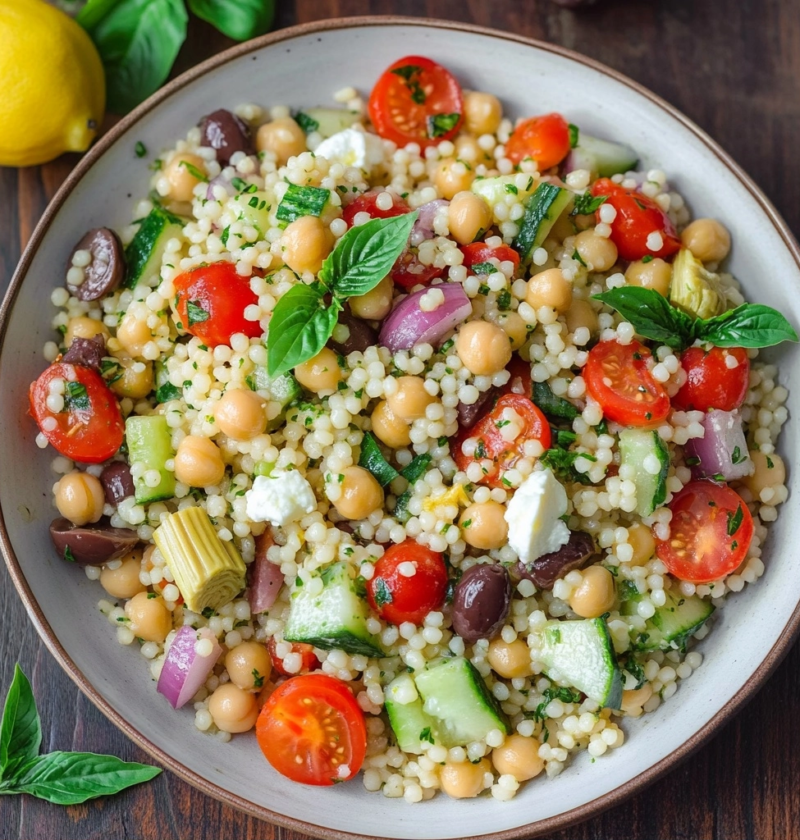
This Mediterranean Couscous Salad combines fluffy grains with fresh vegetables and tangy dressing for a satisfying meal. It delivers a burst of flavor that remains bright and fresh throughout the day. The dish offers the perfect balance of texture and nutrition for warm weather dining.
| Detail | Information |
|---|---|
| Prep Time | 15 minutes |
| Cook Time | 10 minutes |
| Total Time | 25 minutes |
| Servings | 6 servings |
| Difficulty | Easy |
| Cuisine | Mediterranean |
| Category | Healthy & Light |
| Method | No-cook Assembly |
Why This Recipe Works
This Mediterranean Couscous Salad recipe succeeds by balancing the texture of toasted pearl couscous with the crispness of raw vegetables. The acid from lemon juice cuts through the richness of the olive oil to create a palate-cleansing effect. Each component maintains its individual character while contributing to the whole dish perfectly.
Toasting the couscous before boiling adds a nutty depth that standard boiling methods often miss. This simple technique prevents the grains from becoming mushy and provides a delightful chew. It transforms a simple side dish into a substantial main course worthy of attention.
The dressing adheres well to the grains because the lemon juice emulsifies slightly with the olive oil. This ensures every bite delivers consistent seasoning without the need for excessive salt. Fresh herbs provide a bright finish that makes the salad feel lighter despite its hearty ingredients.
Vegetarians and vegans alike will find satisfaction in this versatile dish packed with plant-based protein. The chickpeas add a robust element that keeps you full for hours after eating. It is a reliable option for potlucks or quick weeknight dinners during the summer season.
Chef Tips for Perfect Results
Achieving the best flavor requires attention to heat management and ingredient preparation timing.
- Toast the grains properly: Heat the olive oil in a skillet until shimmering and add couscous. Stir constantly over medium heat until the grains reach a deep golden color.
- Use boiling water: Add the liquid only after it reaches a rolling boil to ensure even cooking and hydration of the grains.
- Rinse the chickpeas: Drain and rinse canned legumes to remove excess sodium and the starchy canning liquid.
- Chop vegetables small: Keep the cucumber and tomatoes in bite-sized pieces to ensure even distribution in every forkful.
- Salt in layers: Season the dressing first, then toss the vegetables, and finish with a pinch of salt on the couscous.
- Cool before mixing: Let the cooked grains cool completely to room temperature to prevent wilting the fresh herbs.
- Store dressing separate: If making ahead, keep the dressing in a separate jar to maintain grain texture until serving time.
- Chill before serving: Allow the salad to sit in the refrigerator for thirty minutes to let flavors meld and intensify.
Common Mistakes to Avoid
Failing to avoid these common pitfalls ensures your dish remains delicious and safe to eat.
| Mistake | Why It Happens | How to Fix It |
|---|---|---|
| Overcooked Couscous | Cooking it too long makes grains mushy. | Follow package timing strictly and drain immediately. |
| Wilted Basil | Adding herbs to hot ingredients kills freshness. | Wait until couscous cools to room temperature. |
| Watery Salad | Vegetables release juice over time in salt.** | Pat tomatoes dry and add salt right before serving. |
| Bland Flavor | Insufficient seasoning or lack of acid. | Taste and adjust lemon juice and salt before finishing. |
| Sticky Texture | Gathering together due to excess starch. | Rinse cooked couscous under cold water to wash off starch. |
| Uneven Cooking | Inconsistent water temperature or heat level. | Ensure water boils vigorously before adding grains. |
Variations and Substitutions
You can customize this salad to suit different dietary needs or flavor preferences easily.
| Ingredient or Element | Substitution or Variation | Impact on Flavor or Texture |
|---|---|---|
| Pearl Couscous | Quinoa or Brown Rice | Changes texture to be nuttier or stickier. |
| Mozzarella or Feta | Goat Cheese | Adds a tangy sharpness and creaminess. |
| Romaine Lettuce | Spinach Leaves | Reduces crunch and adds earthy mild flavor. |
| Fresh Basil | Dried Herbs | Loses brightness and requires less volume. |
| Kalamata Olives | Green Olives | Shifts flavor profile to a brinier bite. |
| Red Onion | Shallots | Softens the pungency and adds sweetness. |
| Whole Wheat Couscous | Einkorn or Spelt Couscous | Increases fiber content and nutty depth. |
| Canned Artichokes | Frozen or Fresh Artichokes | Requires extra cooking time and prep. |
| Vegetables | Roasted Red Peppers | Introduces smoky sweetness and soft texture. |
Serving Suggestions and Pairings
This salad pairs well with a variety of main courses and appetizers to round out a meal.
- Grilled Chicken Breast: A simple protein addition makes the meal more filling.
- Vegetarian Gyros: Serve with warm pita and tzatziki sauce on the side.
- Baked Salmon: The citrus flavors complement the rich fish perfectly.
- Roasted Red Pepper Soup: A cool contrast to the warm bowl of grains.
- Garlic Breadsticks: Adds a crunchy element for dipping into the dressing.
- Fresh Fruit Salad: Provides sweetness to balance the savory Mediterranean elements.
- Iced Herbal Tea: A non-alcoholic drink option that refreshes the palate.
- Hummus Plates: Create a mezze-style spread with vegetables and dips.
- Fried Eggplant: Adds a crispy texture to contrast the soft grains.
- White Beans:** Serve them alongside for a fiber-rich combination.
- Pasta Salad: Swap the couscous for pasta for a heartier version.
- Grilled Zucchini: Adds another roasted vegetable dimension to the plate.
Consider serving this dish alongside grilled lamb kofta and warm pita bread for a complete dining experience that captures the essence of the Mediterranean coast.
Make Ahead Options
Yes, you can prepare most components of this salad well before your scheduled serving time. The couscous and dressing hold up best when stored separately to preserve texture.
You can cook and toast the grains up to three days in advance. Store them in an airtight container in the refrigerator to maintain freshness and prevent them from drying out. Chop the vegetables the night before and keep them chilled in water to retain their crispness.
Combine the salad the morning of your event to ensure the herbs remain fresh and bright. This method prevents the vegetables from becoming waterlogged and the grains from absorbing too much lemon juice earlier.
Storage and Reheating
Proper storage maintains the quality and safety of this vegetarian dish for several days.
| Method | Duration | Instructions |
|---|---|---|
| Room Temperature | 2 hours max | Keep covered to prevent contamination and drying out. |
| Refrigerator | 4 days | Store in a sealed container with a towel to absorb moisture. |
| Freezer | Not recommended | Veggies become mushy upon thawing and ruining texture. |
| Reheating | Not needed | Serve cold or at room temperature for best flavor. |
| Make Ahead | 3 days | Refrigerate components separately and mix before serving. |
Nutritional Information
Approximate values are based on one serving and may vary depending on exact ingredients and portion size.
| Nutrient | Amount per Serving |
|---|---|
| Calories | 350 |
| Protein | 10 grams |
| Fat | 15 grams |
| Saturated Fat | 2 grams |
| Carbohydrates | 45 grams |
| Fiber | 6 grams |
| Sugar | 5 grams |
| Sodium | 500 milligrams |
Frequently Asked Questions
Can I substitute the pasta with another grain?
Yes, you can swap the grain for quinoa, bulgur, or farro in this recipe. Just adjust the cooking liquid and time based on the grain type you choose. The flavor profile remains similar with a Mediterranean twist.
How do I know when the couscous is done cooking?
The grains are ready when they absorb most of the liquid and become tender with a slight chew. They should not be crunchy or hard when bitten in the center. Taste a few pieces to verify doneness.
Why did my salad become too dry after sitting?
Grains absorb moisture from the dressing over time and can dry out. Add a splash of olive oil or lemon juice before serving to rehydrate the mixture. Toss gently to distribute the moisture evenly.
Can I freeze this dish for later meals?
Fresh vegetables and soft cheeses do not freeze well in this salad. The texture becomes watery and unappealing once thawed completely. It is best to make fresh or freeze the cooked grains and cheese separately.
Is this salad safe for a hot outdoor picnic?
Yes, the high oil content helps preserve freshness at moderate temperatures. Keep the salad in an insulated cooler with ice packs during transport. Serve it within two hours to ensure food safety.
How should I handle leftover dressing?
Store any unused dressing in a sealed jar in the refrigerator. It will last for up to a week and can be used as a salad dressing. Shake the jar vigorously before using to re-emulsify the oil and acid.
Conclusion
This Mediterranean Couscous Salad stands out as a versatile and healthy option for any season. It delivers the perfect blend of fresh vegetables and savory grains in every bite. We hope you prepare it for your next gathering or quick meal. Enjoy the bright flavors and comforting texture of this delicious dish.
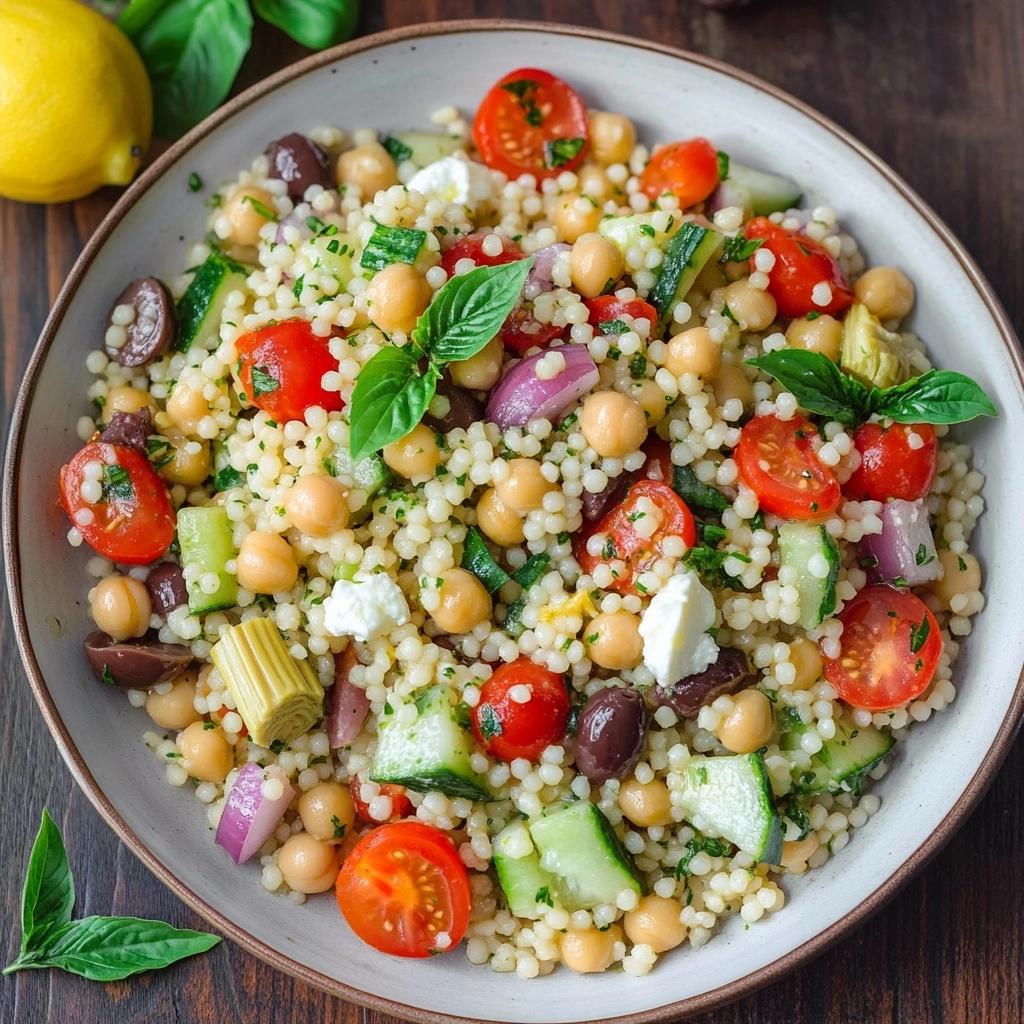
Mediterranean Couscous Salad Recipe for Summer Lunches
Ingredients
Method
- Heat 1 tablespoon olive oil in a skillet over medium heat. Add couscous and toast, stirring constantly, until golden (3-4 minutes). Add 1 1/2 cups boiling water, then remove from heat and let stand 5 minutes. Fluff couscous with a fork.
- Combine couscous, cucumbers, cherry tomatoes, red onion, olives, chickpeas, parsley, and mint in a large bowl. Whisk together remaining 3 tablespoons olive oil, lemon juice, salt, and pepper. Toss dressing with salad until fully coated. Chill 30 minutes before serving.
Nutrition
Notes
Rinse chickpeas thoroughly to ensure crisp texture
For vegan version, substitute feta with vegan cheese alternative
Store leftovers in airtight container in fridge for up to 3 days