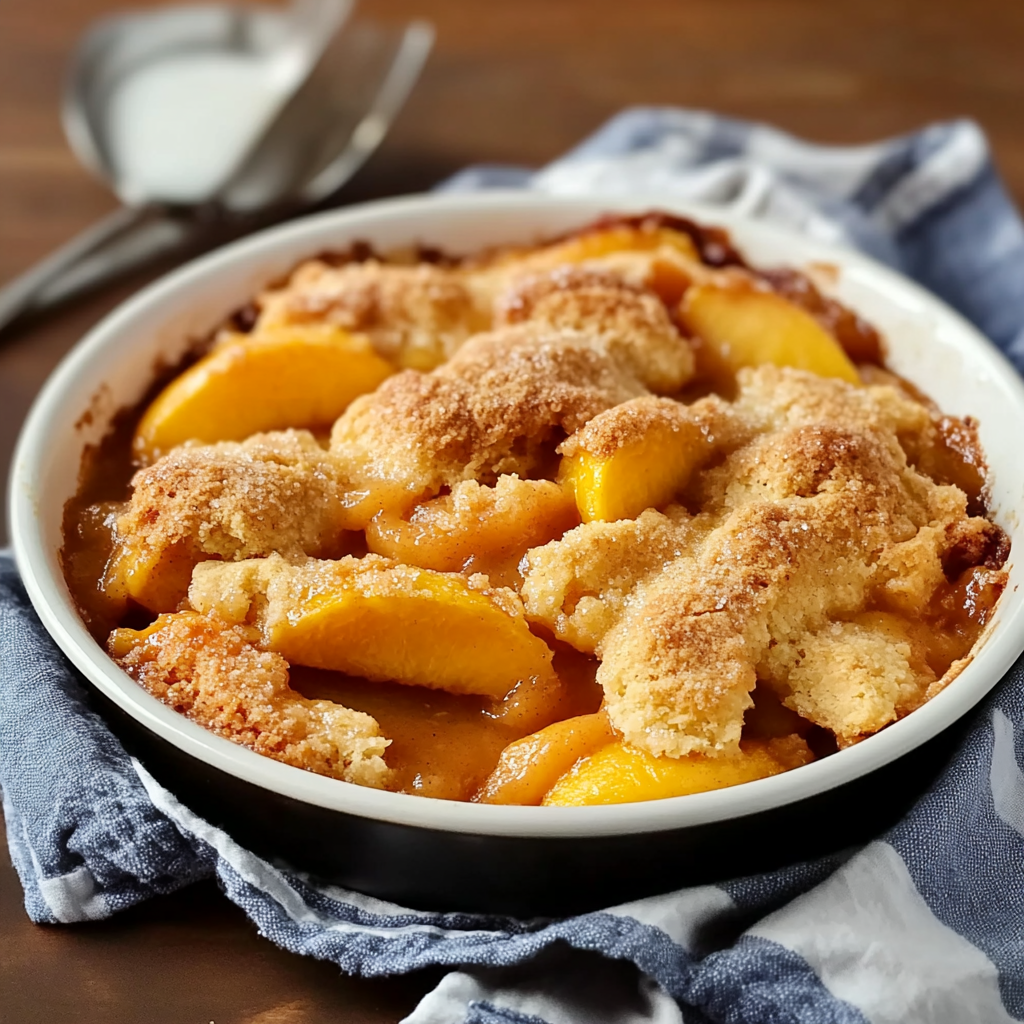
Peach Cobbler is a cherished Southern dessert known for its tender fruit filling and crumbly, buttery topping that melts in your mouth. This classic treat showcases the natural sweetness of ripe summer stone fruit enhanced by warm spices and vanilla. It represents the quintessential comfort food that brings families together for celebrations or quiet Sunday evenings. The dish has deep roots in American culinary history and remains a staple for potlucks and holiday gatherings. You will find that the texture creates a unique contrast between the saucy fruit and the golden, biscuit-like crust on top. This homemade recipe is designed to be approachable for home cooks while delivering professional-level flavor results.
Many bakers worry that baking fruit desserts can result in a soggy bottom or a dry topping. Our approach prevents this issue by pre-baking the peaches slightly to release their juices before adding the cobbler mix. This step ensures the fruit is tender and the syrup thickens properly without overcooking the batter. We focus on using fresh, seasonal produce to maximize the flavor profile of the finished dish. The addition of a pinch of cinnamon and a dash of lemon juice balances the sugars perfectly. You do not need to be a pastry chef to achieve this level of deliciousness in your own kitchen oven.
Why This Recipe Works
This cobbler recipe succeeds because of the careful balance between the fruit filling and the biscuit topping. I have spent years testing different ratios of flour to butter to achieve a crumb that is flaky yet soft. The key insight is to ensure the butter is cold when it hits the flour mixture for the best texture. This technique creates pockets of steam during baking which lifts the topping for a light crust. Using brown sugar in the topping adds a deeper caramel flavor that complements the bright acidity of the peaches. The pre-baking of the fruit prevents excess water from seeping into the raw batter too quickly.
The consistency of the filling is managed by using cornstarch to thicken the juices released during the cooking process. This prevents the dessert from becoming too runny while still allowing it to be spoonable. The inclusion of nutmeg adds a subtle warmth that enhances the overall fruit profile without overpowering it. I prefer using all-purpose flour because it provides enough structure to hold the fruit without becoming tough like bread. The boiling water is a secret ingredient that tenderizes the crust and makes it more cake-like in texture. This combination creates a cohesive bite where the fruit and topping are perfectly united. It is a foolproof method that works even if you are a beginner baker looking for reliable results.
Chef Tips for Perfect Results
Achieving a golden and tender peach cobbler requires attention to temperature and ingredient preparation. You should ensure your baking pan is the correct size to allow the filling to bubble over easily. Keep the oven fully preheated to guarantee the immediate rise of the biscuit topping.
- Chill your butter: Use cold, cubed butter from the refrigerator to maintain distinct pieces in the flour mixture for flakiness.
- Cut peaches evenly: Peel and slice the fruit into uniform wedges so they bake at the same rate.
- Do not overmix: Stir the dry ingredients for the topping just until combined to avoid toughening the biscuits.
- Use fresh fruit: Select peaches that yield slightly to pressure for the best flavor and juiciness.
- Pre-bake the filling: Bake the fruit layer for ten minutes before adding the topping to reduce excess moisture.
- Check for doneness: Look for a golden brown color on the topping and bubbling edges for the filling.
- Let it rest: Allow the cobbler to cool for twenty minutes so the filling thickens before serving.
- Season the air: Add a pinch of salt to enhance the sweetness of the sugar and fruit noticeably.
Common Mistakes to Avoid
Even experienced cooks can make errors that negatively affect the final texture and flavor of the dessert. Understanding these common pitfalls helps you maintain high standards and avoid disappointing results.
| Mistake | Why It Happens | How to Fix It |
|---|---|---|
| Soggy Bottom | Too much liquid in the fruit filling before baking. | Pre-bake the fruit with sugar and cornstarch to thicken the juices. |
| Dry Topping | Overmixing the biscuit dough or adding too much flour. | Stir ingredients gently and measure flour carefully without packing the cup. |
| Undercooked Fruit | The oven temperature was too low or baking time was short. | Ensure the oven is calibrated and check fruit tenderness near the end. |
| Burnt Crust | The topping browned too quickly before the center cooked. | Loosely tent the cobbler with foil if the edges turn dark prematurely. |
| Runny Slopes | Insufficient thickener like cornstarch used in the filling. | Add the exact amount of cornstarch specified for the volume of fruit. |
| Bland Flavor | Lack of spices or using under-ripe stone fruit. | Add cinnamon, nutmeg, and ensure peaches are fragrant and ripe. |
Variations and Substitutions
Customizing this classic recipe allows you to adapt it for dietary needs or personal flavor preferences. The base structure is versatile enough to accommodate various fruits and ingredient swaps.
| Ingredient or Element | Substitution or Variation | Impact on Flavor or Texture |
|---|---|---|
| White Sugar | Coconut Sugar or Maple Syrup | Adds a deeper caramel note and slight chewiness to crust. |
| All-Purpose Flour | Gluten-Free All Purpose Flour Blend | Requires checking hydration to prevent crumbly texture issues. |
| Unsalted Butter | Vegetable Oil or Vegan Butter | Changes flakiness slightly but maintains moistness effectively. |
| Peaches | Blueberries or Apples | Alters fruit acidity and flavor profile significantly. |
| Cinnamon | Ground Ginger or Allspice | Introduces a spicy and warming background flavor boost. |
| Boiling Water | Milk or Cream | Creates a richer, cake-like batter texture instead of biscuit. |
| Nutmeg | Star Anise Powder | Provides a more intense aroma and complex spice finish. |
| Lemon Juice | Vinegar or Lime Juice | Acts as an acid to balance sweetness and prevent browning. |
Serving Suggestions and Pairings
This dessert is best enjoyed warm and is often served directly from the baking dish for communal sharing. Consider how these pairings elevate the overall dining experience for guests or family meals. You might want to prepare a few sides to round out your menu for a special occasion.
- Serve with a scoop of vanilla bean ice cream for a cold and creamy contrast.
- Drizzle lightly with a homemade caramel sauce for an extra touch of luxury and sweetness.
- Pair with a dollop of freshly whipped cream sweetened with a touch of vanilla extract.
- Offer with a side of sharp cheddar cheese for a traditional Southern savory and sweet combination.
- Match the dessert with a hot cup of black coffee to cut through the richness of the butter.
- Enjoy with a glass of cold whole milk for a simple and classic comfort beverage pairing.
- Complement the fruit tart with a side of cinnamon toast for a cohesive breakfast dessert vibe.
- Serve alongside a light fruit salad to balance the intensity of the warm baked peach cobbler.
For a complete meal idea, serve this dessert as the finale after a roast chicken dinner with roasted vegetables. If you are hosting a casual afternoon gathering, pair the cobbler with a fresh fruit platter and lemonade. The warm spices blend beautifully with the cool afternoon breeze during summertime patio events. Everyone will appreciate the effort and comfort this homemade dish brings to the table.
Make Ahead Options
Yes, you can prepare most of this dish ahead of time without compromising the quality of the final texture. The filling can be made up to one day in advance and stored in the refrigerator until baking. You can also mix the dry topping ingredients and prepare the butter earlier to save prep time on the day of serving. It is important to assemble the cobbler just before baking to ensure the flour mixture does not absorb too much moisture. Reheating the filling in the oven before adding the topping helps refresh the flavor profile. The fresh peaches might lose some firmness during the storage process so keep that in mind. If you make it ahead, let the topping return to room temperature before baking for even cooking. This method ensures the crust rises properly and does not sink into the fruit layer.
Storage and Reheating
Proper storage ensures the dessert remains safe to eat and maintains its delicious texture for several days. Keep your leftovers organized using the correct methods for refrigeration and freezing. Always use airtight containers to prevent the crust from drying out or absorbing odors. You might find that reheating the cobbler restores the warmth and flakiness better than eating it cold.
| Method | Duration | Instructions |
|---|---|---|
| Room Temperature | Up to 2 Days | Cover loosely with foil to prevent drying while allowing air circulation. |
| Refrigerator | Up to 5 Days | Store in an airtight container to maintain freshness and flavor. |
| Freezer | Up to 3 Months | Wrap the dish tightly in plastic and then foil before placing in the freezer. |
| Reheating | 15-20 Minutes | Warm in the oven at 350F to restore the crisp texture of the topping. |
| Make Ahead | 24 Hours | Prepare filling and topping separately. Assemble right before baking. |
Nutritional Information
Approximate values are based on one serving and may vary depending on exact ingredients and portion size.
| Nutrient | Amount per Serving |
|---|---|
| Calories | 320 |
| Protein | 4g |
| Fat | 14g |
| Saturated Fat | 8g |
| Carbohydrates | 50g |
| Fiber | 3g |
| Sugar | 38g |
| Sodium | 110mg |
Frequently Asked Questions
Can I use frozen peaches instead of fresh ones?
Yes, you can use frozen peaches effectively without compromising the overall structure. Ensure they are thawed and drained of excess liquid before mixing with sugar. You may need to increase the baking time slightly to account for the extra moisture released. This substitution is ideal when fresh fruit is not available during the winter months.
What is the best way to determine if it is done?
You should look for a deep golden brown color on the biscuit topping to confirm doneness. Check that the fruit filling is bubbling actively around the edges of the baking dish. A toothpick inserted into the topping should come out clean without wet batter attached. These visual cues are indicators that the interior has cooked through fully.
How do I troubleshoot if the filling is too runny?
If the filling seems too runny, place the dish back in the oven for another ten minutes. Ensure the cornstarch was dissolved in the fruit mixture before the heat was applied. This thickening agent needs time and heat to activate its gelling properties effectively. Do not serve immediately if it is still too liquidy to maintain structure.
Can I make this dessert suitable for a dairy-free diet?
Absolutely, you can substitute the butter with coconut oil or a plant-based butter alternative. The topping will still bake into a flaky layer with the proper technique and temperature. You will also need to use dairy-free ice cream or whipped coconut cream for serving. These swaps allow everyone to enjoy the flavors without consuming animal products.
What is the best fruit to substitute for peaches?
Apriyots and plums make excellent replacements for peaches in this traditional cobbler recipe. They have a similar acidity and texture that works well with the buttery topping. Berries like strawberries or blackberries also work if adjusted for baking time. Choose fruits that hold their shape when baked to retain the presentation.
How do I store the leftovers for later consumption?
Store the baked cobbler in an airtight container in your refrigerator for up to five days. You can extend the shelf life by freezing it for up to three months if wrapped well. Always reheat portions individually in the oven to restore crispness before eating. Keep it away from strong-smelling foods to prevent flavor absorption in the container.
Conclusion
Creating a delicious Peach Cobbler is an achievable delight that rewards patience with incredible taste. You will appreciate the rich butter flavor and the burst of juicy fruit in every bite. This recipe stands out as a perfect example of why homemade baked goods are superior to store-bought options. The warm spices and tender crust make it a dessert that guests will always request. I encourage you to try this recipe and experience the comfort of this classic Southern favorite. It is a timeless dish that brings joy to any table.
Peach Cobbler Recipe Classic Soft And Buttery Texture
Ingredients
Method
- Preheat oven to 375°F (190°C). Grease a 9x13-inch baking dish.
- In a large bowl, mix peaches, brown sugar, cornstarch, cinnamon, nutmeg, lemon juice, and vanilla. Transfer half the mixture to the prepared dish.
- To make the topping: In another bowl, cut butter into flour until crumbly. Add granulated sugar, baking powder, and salt. Stir in boiling water until just combined. The batter should be thick and slightly lumpy.
- Spread the batter over the peaches, then top with remaining peaches and sprinkle with coarse sugar. Bake for 45–50 minutes, until golden and bubbly. Let cool slightly before serving.
Nutrition
Notes
Adjust sweetness based on peach ripeness.
Cover and refrigerate leftovers for up to 3 days.