

As the delightful aroma of sizzling tofu fills the kitchen, I find myself transported to the bustling streets of Bangkok, where vibrant colors and enticing flavors dance together in harmony. Today, I’m excited to share my 30-Minute Vegan Pad Thai recipe, a quick and easy twist on the classic dish that celebrates the essence of Thai cooking while being wholly plant-based. This recipe not only satisfies your cravings for something savory and satisfying, but it also serves up a healthier alternative that’s perfect for those busy weeknights or leisurely weekends when takeout feels tempting. With the right balance of sweet, tangy, and spicy notes, I can promise it’ll leave your taste buds tingling and your heart full. Are you ready to indulge without the guilt? Let’s dive into this delicious adventure!

Why is This Vegan Pad Thai a Must-Try?
Quick and Easy: In just 30 minutes, you’ll have a delicious meal on the table that rivals your favorite takeout. Perfect for busy individuals craving homemade meals!
Flavor Explosion: Made with a perfect blend of tamari, sriracha, and peanut butter, expect a burst of savory flavor in every bite.
Enjoy Versatility: Feel free to customize with your favorite veggies or swap tamari for soy sauce for a gluten-free delight.
Texture Perfection: Crispy tofu paired with tender noodles and fresh vegetables ensures a satisfying bite every time.
Healthier Choice: You can savor indulgence without the guilt; this dish is plant-based and nutritious, making it a wholesome option for any meal.
For a refreshing accompaniment, consider serving it with a crunchy Cucumber Salad Bowl for the ultimate flavor combo!
Vegan Pad Thai Ingredients
• Get ready for a flavorful adventure!
For the Tofu
- Crispy Tofu – Use extra firm tofu for ideal texture; pressing it removes excess moisture for maximum crispiness.
- Cornstarch – Essential for that crunchy exterior; it helps achieve perfect crispiness when cooked.
For the Sauce
- Tamari Sauce – A salty, umami-rich base; try low sodium for a healthier option, or substitute with soy sauce.
- Agave Nectar – Adds sweetness to balance flavors; maple syrup also works well for a different note.
- Vegetable Broth – Enhances the richness of the sauce; opt for low sodium for a healthier twist.
- Rice Vinegar – Provides acidity and flavor depth; tamarind can be used if available for authenticity.
- Peanut Butter – Brings creaminess and a nutty flavor; creamy is best for mixing, but tahini is a great alternative.
- Sriracha – Introduces a lovely heat; adjust according to your personal spice preference.
For the Noodles and Veggies
- Pad Thai Noodles – The foundation of this dish, ensuring that delightful texture; cook them al dente for the best bite.
- Oil (Grapeseed or High Smoke Point Oil) – Necessary for frying the tofu and sautéing vegetables; it helps achieve the perfect crispiness.
- Green Onions – Adds fresh flavor and crunch; separate the white and green parts for an extra layer of taste.
- Carrots – Provide sweetness and color; julienne them for even cooking and an eye-catching presentation.
- Garlic – Intensifies flavor; freshly minced garlic contributes the best taste.
- Mung Bean Sprouts – Offer crunch and freshness, elevating the final dish.
Optional Garnishes
- Cilantro – Adds a fresh, herbaceous note; use as a bright garnish.
- Peanuts – Provide a satisfying crunch and nuttiness; serve them crushed or chopped atop the dish.
- Limes – Brightens the meal just before serving; a squeeze adds that perfect zing!
Get your ingredients ready, and let’s create a Vegan Pad Thai that will leave you craving more!
Step‑by‑Step Instructions for 30-Minute Vegan Pad Thai
Step 1: Prepare the Sauce
In a medium bowl, whisk together ¼ cup tamari sauce, 2 tablespoons agave nectar, ⅓ cup vegetable broth, 1 tablespoon rice vinegar, 2 tablespoons peanut butter, and 1-2 teaspoons sriracha depending on your spice preference. Stir until smooth and well combined, adjusting flavors as desired. Set this flavorful sauce aside to let the ingredients meld while you tackle the next steps of your Vegan Pad Thai.
Step 2: Prep the Tofu
Take a block of extra firm tofu, press it to remove excess moisture, and cut it into 1-inch cubes. In a mixing bowl, toss the tofu cubes with 2 tablespoons of cornstarch and a pinch of salt until evenly coated. This will ensure a crispy texture when cooked. Set aside your seasoned tofu, ready to become a highlight in your Vegan Pad Thai.
Step 3: Cook the Noodles
Begin cooking the Pad Thai noodles as per the package instructions, usually around 5–7 minutes. To achieve a better texture, reduce the cooking time by 1-2 minutes, so the noodles remain slightly firm (al dente). Once done, drain and rinse them under cold water to stop the cooking process, preventing stickiness. Set the noodles aside as you prepare the rest of the dish.
Step 4: Fry the Tofu
In a wok or large frying pan, heat 2 tablespoons of grapeseed oil over medium-high heat. Once the oil is shimmering, gently add the coated tofu cubes. Cook for about 5–7 minutes, flipping occasionally until they are golden brown and crispy on all sides. Once perfectly crispy, transfer the tofu to a plate and set aside, allowing the oil and flavors to build in the pan for the next step.
Step 5: Sauté the Veggies
In the same wok, add an additional tablespoon of oil if needed, and toss in the white parts of 2 chopped green onions, 1 julienned carrot, and 3 cloves of freshly minced garlic. Sauté for about 1–2 minutes until the vegetables are vibrant and fragrant, stirring frequently to avoid burning the garlic. The mixture should brighten in color, setting the stage for your Vegan Pad Thai.
Step 6: Combine the Sauce and Noodles
Pour your prepared sauce over the sautéed vegetables, allowing it to bubble for a minute while stirring to combine. Next, gently add the cooked Pad Thai noodles to the wok, tossing everything together until the noodles are completely coated in the sauce and heated through—about 2–3 minutes. The noodles should be gleaming with flavor, making this Vegan Pad Thai irresistible.
Step 7: Fold in Tofu and Sprouts
Carefully fold the crispy tofu cubes and a handful of mung bean sprouts into the noodle mixture. Remove the wok from heat once everything is combined and heated through, about 1 minute more. Sprinkle the remaining green onion tops over the dish for a pop of freshness, making your Vegan Pad Thai a colorful treat.
Step 8: Serve and Garnish
Dish out the Vegan Pad Thai onto plates and serve hot. For an extra crunch and flavor burst, sprinkle with crushed or chopped peanuts. Garnish with fresh cilantro and lime wedges to squeeze over the dish just before enjoying. The vibrant colors and aromatic toppings elevate your meal, inviting everyone to savor each delightful bite.
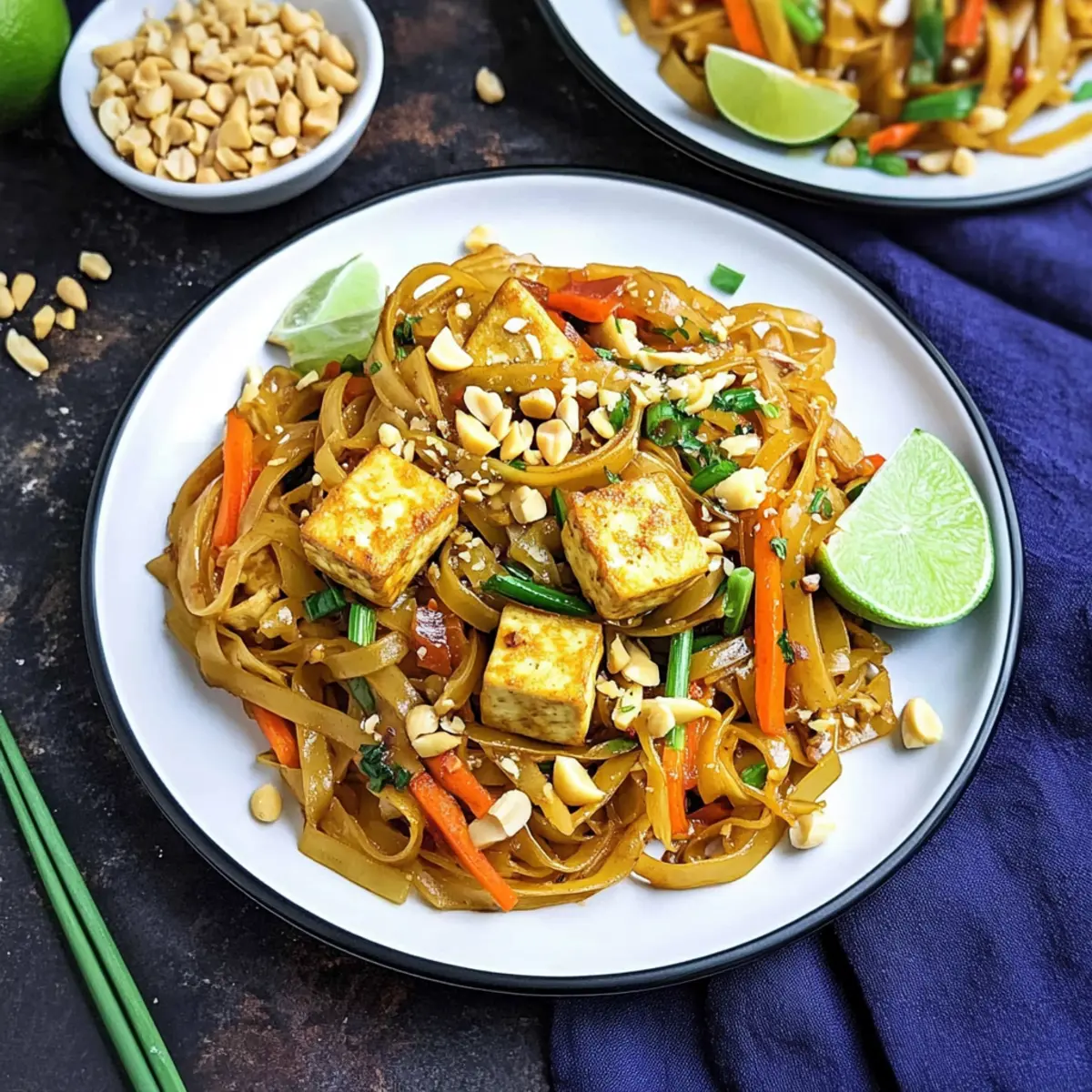
Make Ahead Options
These 30-Minute Vegan Pad Thai ingredients are perfect for meal prep enthusiasts! You can prepare the sauce—combining tamari, agave nectar, vegetable broth, rice vinegar, peanut butter, and sriracha—up to 3 days in advance. Store it in an airtight container in the refrigerator to maintain its vibrant flavors. Additionally, the tofu can be pressed and coated with cornstarch 24 hours ahead, ensuring optimal crispiness when cooked. Just before serving, sauté the tofu and veggies as outlined, then mix in the prepped sauce and noodles for an effortlessly delicious meal. With these make-ahead tips, you’ll savor homemade goodness on even the busiest weeknights!
How to Store and Freeze Vegan Pad Thai
Fridge: Store leftover Vegan Pad Thai in an airtight container for up to 3 days. This helps retain the flavors and texture of the dish.
Freezer: For longer storage, freeze portions in airtight containers for up to 2 months. To avoid freezer burn, wrap tightly in plastic wrap before placing in containers.
Reheating: When ready to enjoy, reheat the Vegan Pad Thai in a pan over medium heat with a splash of vegetable broth. This helps regain moisture and freshness.
Serving Tips: If toppings like peanuts and cilantro were added, consider reserving them for serving to maintain their crunch and vibrancy.
Vegan Pad Thai Variations & Substitutions
Feel free to get creative with this Vegan Pad Thai recipe to suit your taste buds and pantry must-haves!
- Gluten-Free Soy Sauce: Swap out tamari for gluten-free soy sauce to cater to your dietary needs. It’s a simple switch that keeps all the flavors intact.
- Sweetener Alternatives: Use coconut sugar or brown rice syrup in place of agave nectar for a unique sweetness that complements the dish beautifully.
- Veggie Boost: Add seasonal vegetables like zucchini or bell peppers to enrich the dish with color, flavors, and nutrients. They bring freshness and a lovely crunch!
- Noodle Variety: Try using zucchini noodles or rice noodles instead of traditional Pad Thai noodles for a lighter version without sacrificing taste. This little change adds a delightful twist!
- Heat Level: For a bolder kick, sprinkle in some crushed red pepper flakes or toss in additional sriracha. Adjust to your spice preference, and enjoy the heat!
- Protein Options: If you’d like to switch things up, consider chickpeas or tempeh in place of tofu for a different protein source that still aligns with your meal.
- Nut-Free Version: Replace peanut butter with sunflower seed butter to cater to nut allergies while retaining creaminess. It’s an excellent alternative that adds richness!
If you’re also looking to refresh your palate, consider serving this astonishing dish alongside a crunchy Thai Mango Cucumber salad for a burst of refreshing flavors!
What to Serve with 30-Minute Vegan Pad Thai?
Imagine a table filled with delightful contrasts, drawing you into a culinary experience that dances between flavors and textures.
-
Crispy Spring Rolls: Miniature bundles of flavor, these crispy rolls add a satisfying crunch that pairs perfectly with your creamy Pad Thai sauce.
-
Peanut Salad: This refreshing mix of cucumbers, carrots, and peanuts complements the richness of the Pad Thai while echoing the dish’s nutty notes.
-
Spicy Mango Salsa: Bright and zesty, this salsa brings a sweet heat, enhancing the overall flavor experience and refreshing your palate.
Treat your taste buds to a trip to Thailand by serving your Vegan Pad Thai alongside a few other inviting dishes. Trying to balance flavors with delicate fresh herbs or zest? A side of Lime wedges is a must, as they can transform every bite into a new experience. Don’t forget a chilled Coconut Water to wash it all down, offering hydration while echoing that tropical feel.
Expert Tips for the Best Vegan Pad Thai
-
Tofu Tips: Make sure your tofu is well-pressed before coating it with cornstarch. This ensures it fries up crispy rather than soggy.
-
Avoid Overcrowding: When frying the tofu, cook in batches if necessary. Overcrowding the pan can lead to steaming instead of crisping.
-
Taste as You Go: Always taste the sauce before adding it to the noodles. Adjust sweetness or spice to suit your palate for the best Vegan Pad Thai experience.
-
Al Dente Noodles: Cook the Pad Thai noodles just until al dente. This helps maintain the perfect texture when they are tossed with the sauce.
-
Season the Oil: Don’t forget to season the oil before frying the tofu and veggies. A sprinkle of salt enhances overall flavor during cooking.
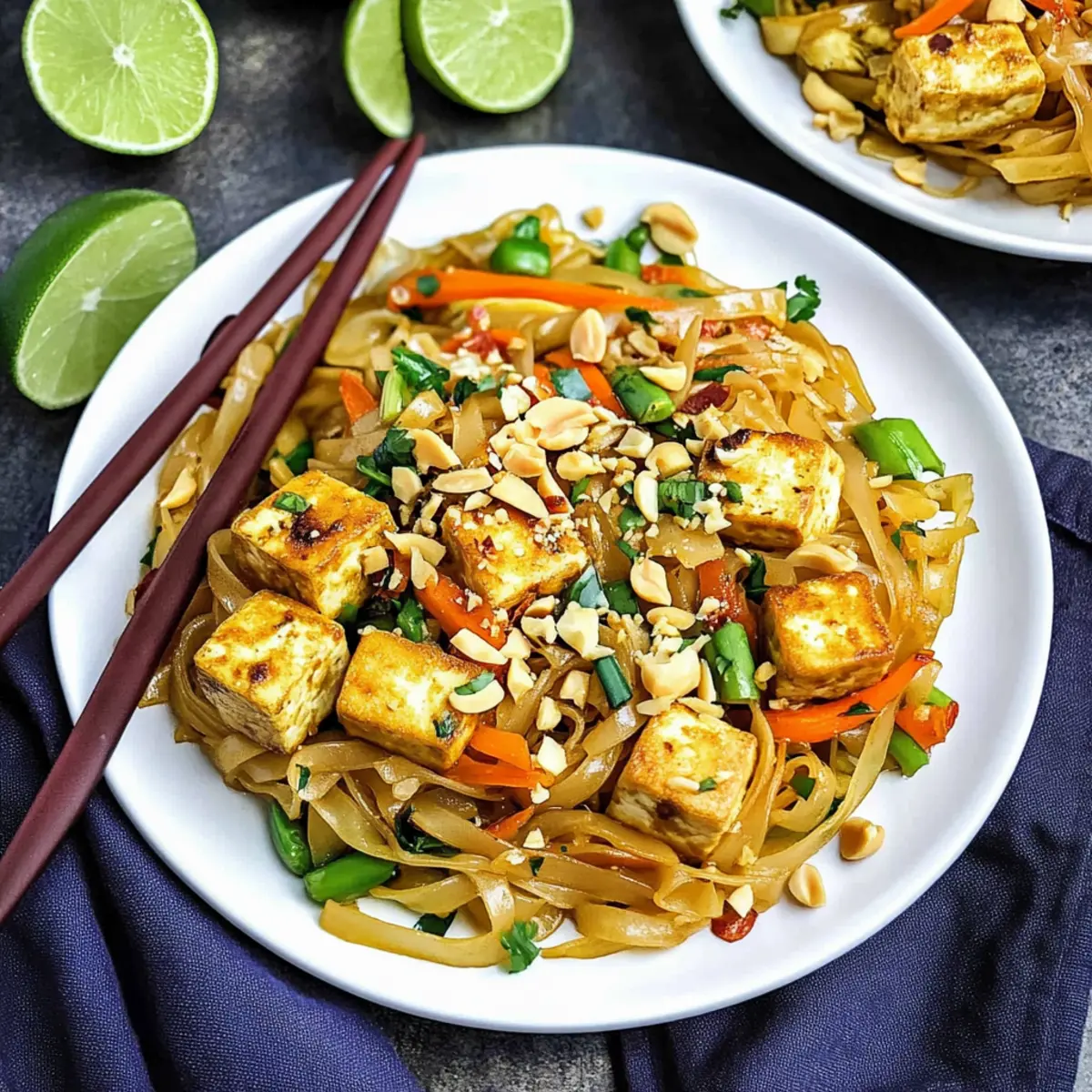
30-Minute Vegan Pad Thai Recipe FAQs
How do I choose the right tofu for my Vegan Pad Thai?
Absolutely! For the best texture, use extra firm tofu. This type has less moisture and provides that desired crispiness when cooked. Make sure to press it beforehand to remove any excess water, which can lead to a soggy texture—nobody wants that!
How should I store leftover Vegan Pad Thai?
Store your leftover Vegan Pad Thai in an airtight container in the fridge for up to 3 days. If you’d like to maintain the dish’s flavors and texture, reheat it gently in a pan with a splash of vegetable broth. This method will help regain some moisture.
Can I freeze Vegan Pad Thai, and if so, how?
Definitely! To freeze your Vegan Pad Thai, divide it into portions and store them in airtight containers for up to 2 months. To prevent freezer burn, wrap the portions tightly in plastic wrap before placing them in containers. When you’re ready to eat, simply thaw in the fridge overnight and reheat in a pan, adding a splash of vegetable broth for moisture.
What should I do if my tofu isn’t getting crispy enough?
Very! If your tofu isn’t crisping up as you expect, make sure you pressed it well to remove moisture and coated it evenly with cornstarch. Also, avoid overcrowding the pan when frying; cook in batches if necessary. Letting the tofu have space will allow it to brown evenly, creating that wonderful crispy exterior you crave.
Are there any dietary considerations I should be aware of?
Certainly! This Vegan Pad Thai is plant-based and therefore suitable for vegans and vegetarians. If you have nut allergies, you can substitute peanut butter with tahini or sun butter. Also, ensure the tamari used is gluten-free if that’s a concern for you.
Can I modify the vegetables in the Vegan Pad Thai?
Absolutely! This recipe is quite versatile. If you want to add extra nutrition, consider including bell peppers, snap peas, or broccoli. Feel free to swap out vegetables based on what you have on hand or your personal preference, making this Vegan Pad Thai a meal that everyone can enjoy.
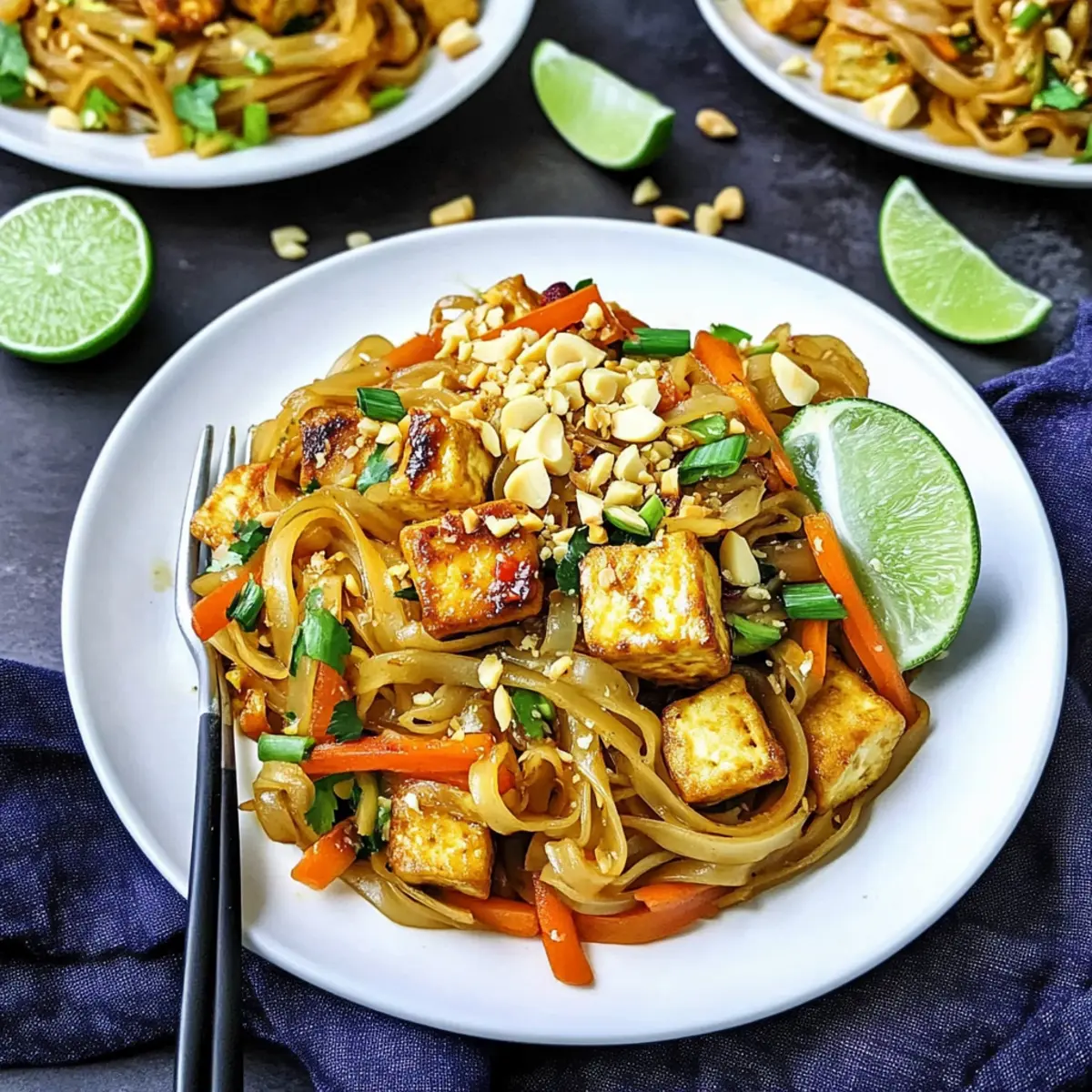
Savor Every Bite of This Easy Vegan Pad Thai Delight
Ingredients
Equipment
Method
- Prepare the sauce by whisking together tamari sauce, agave nectar, vegetable broth, rice vinegar, peanut butter, and sriracha in a bowl.
- Press the tofu, then cut into 1-inch cubes and coat with cornstarch and a pinch of salt.
- Cook the Pad Thai noodles according to package instructions until al dente, then drain and rinse.
- Heat grapeseed oil in a wok and fry the tofu cubes until golden brown and crispy.
- Sauté the white parts of green onions, carrot, and garlic in the same wok.
- Combine the sauce with sautéed vegetables, add the cooked noodles, and toss to coat.
- Fold in the crispy tofu and mung bean sprouts, then sprinkle with green onion tops.
- Serve garnished with cilantro, peanuts, and lime wedges.